



Book a meeting via Phone or Zoom
-

Better Sleep
-

Protection in the pool and surf
-

Music and venues
-

Industry
-

Motorsports
-

Shooting


Musician Ear Plugs Australia
If you have already decided you need hearing protection for playing, the next question is the one that actually determines whether you keep wearing it: which filter?
This page is about that choice — what the numbers mean, what happens if you get it wrong, and how the options differ.
What an acoustic filter does
A foam plug is a blunt instrument. It blocks high frequencies far more than low ones, which is why everything sounds like it is happening in the next room. Speech goes muddy, cymbals disappear, and the bass guitar becomes disproportionately loud.
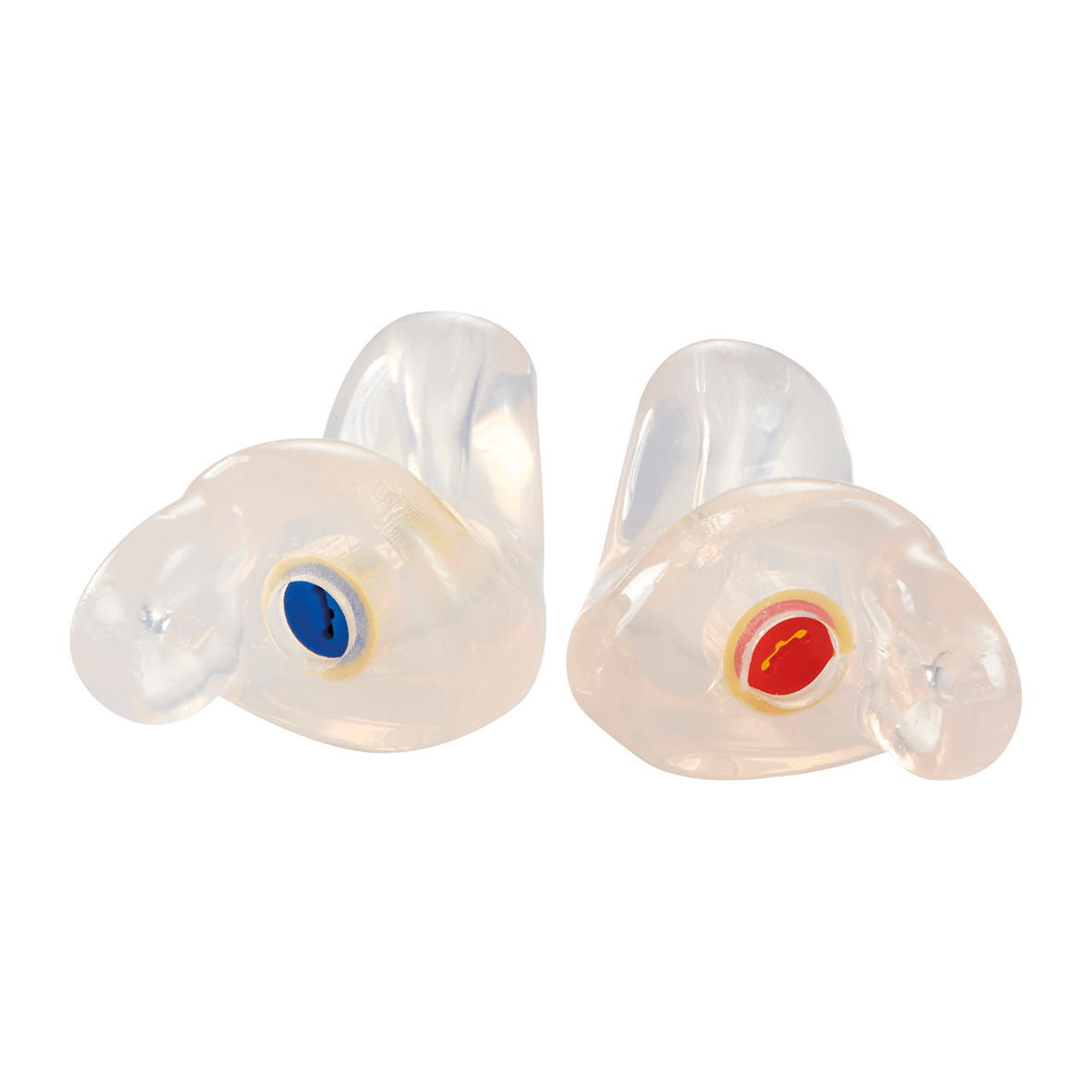
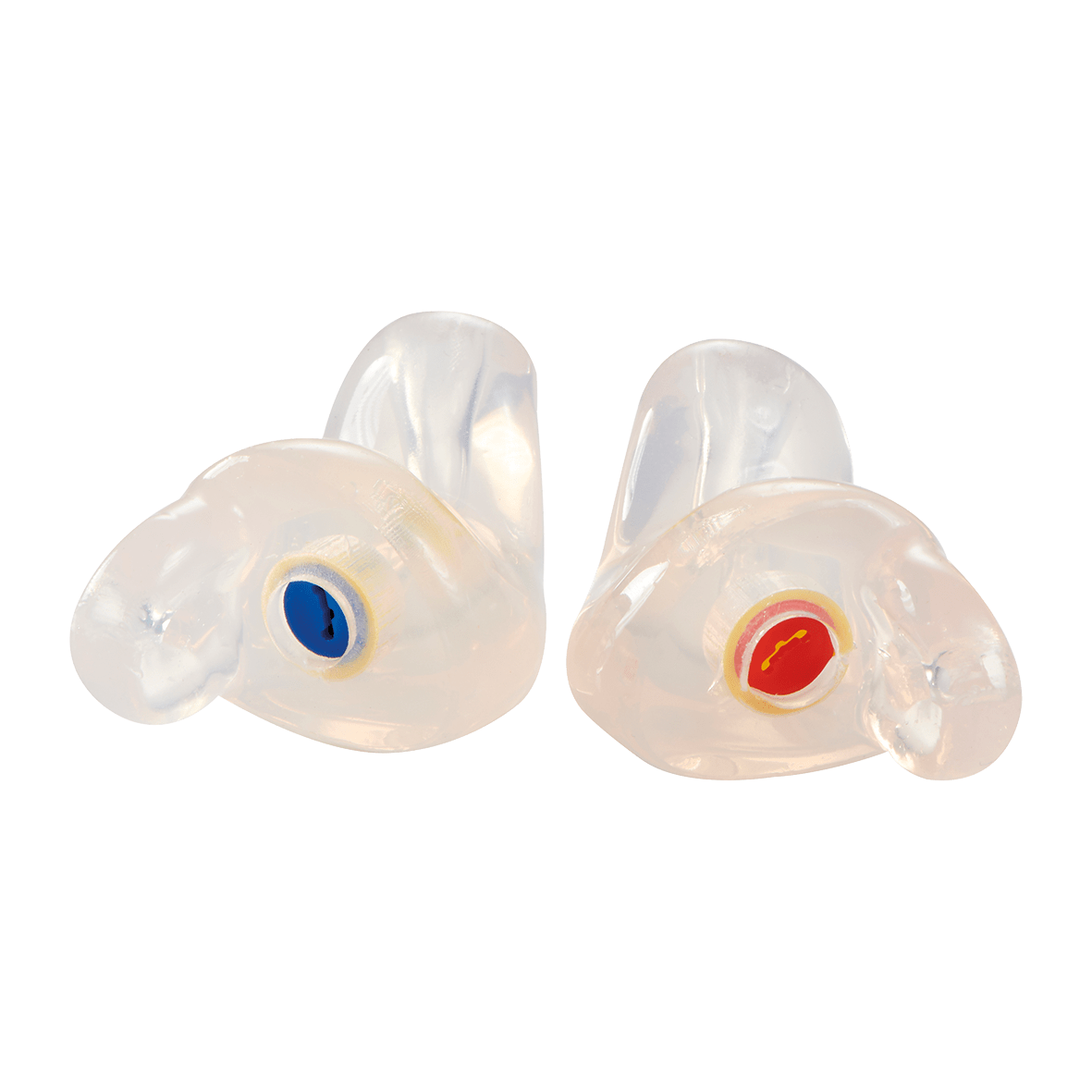
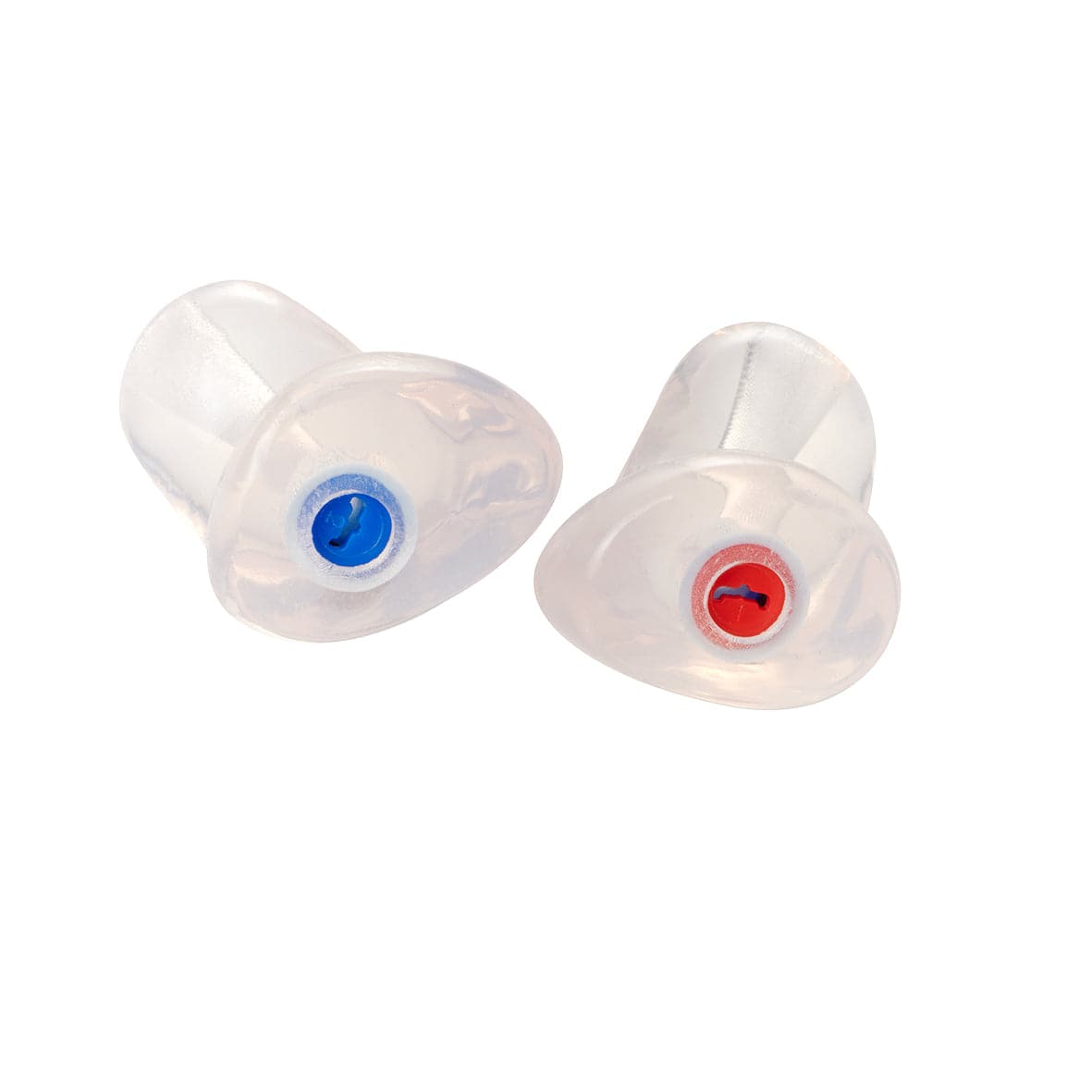
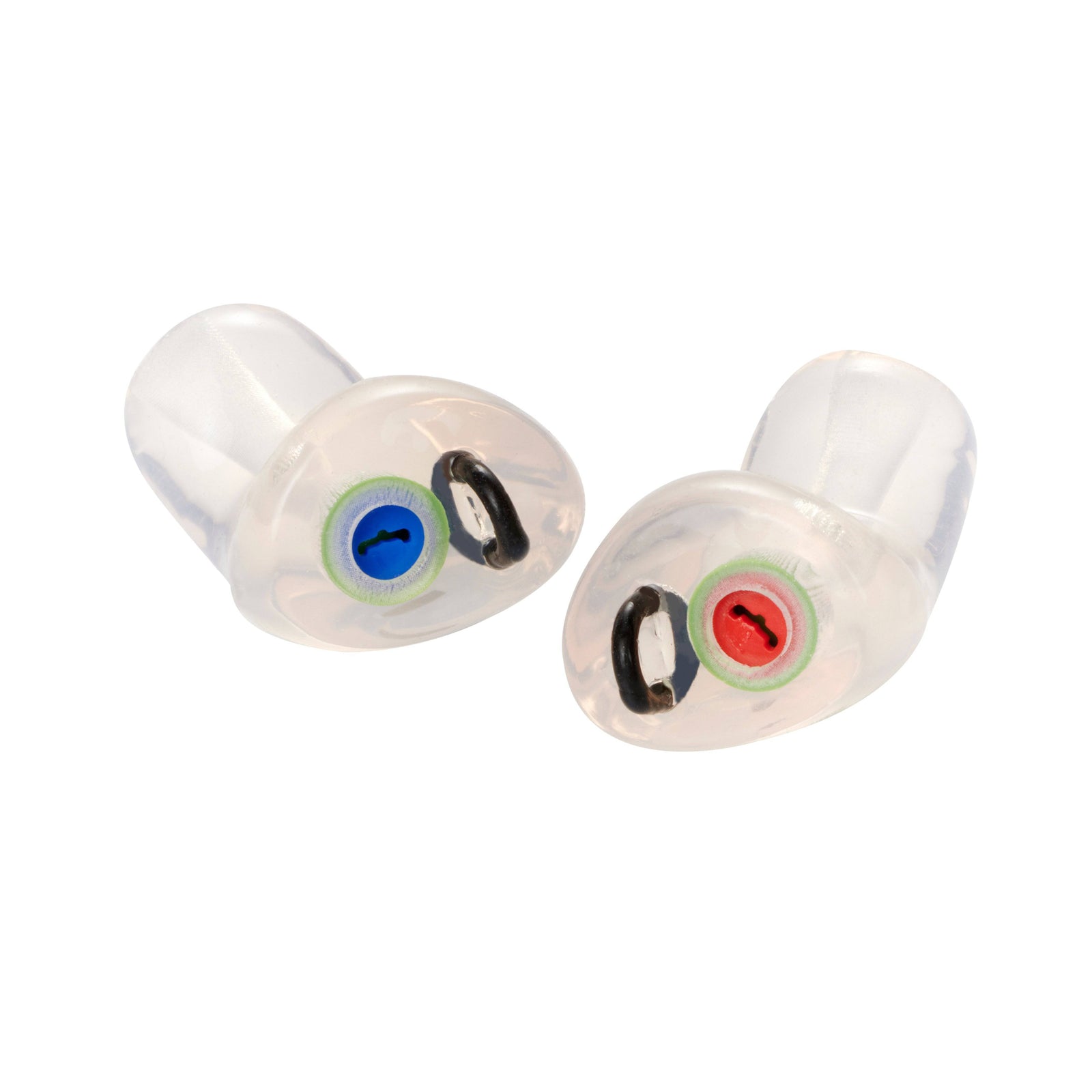
An acoustic filter is a small mechanical assembly — a channel and a membrane — tuned so that attenuation is roughly even across the spectrum. The result is closer to turning the room down than to putting a blanket over it. That is the entire reason musicians can tolerate them and cannot tolerate foam.
How much attenuation do you need?
The honest answer depends on how loud your environment is and how much you need to hear within it.
- Around 10–15 dB — rehearsal, teaching, acoustic and small-room work, orchestral strings and woodwind. Enough to take the edge off without isolating you from the ensemble.
- Around 15–20 dB — the general-purpose choice. Pub and club gigs, most engineers, venue and bar staff, brass players.
- 20 dB and above — loud stages, drummers, anyone directly in front of a large PA, and crew working long festival days.
The failure mode people rarely anticipate is over-protection. Take out too much and you cannot hear yourself, so you push your monitor up, and now you are exposed to more level than you were before. If you are unsure, err lower and wear them consistently rather than higher and take them out.
Custom against universal
Universal filtered earplugs, such as the ACS Pacato range, use the same filter principle in a ready-to-wear body. They are a genuinely good entry point and a sensible spare to keep in a gig bag.
What custom adds is the seal. Low-frequency energy leaks around an imperfect fit, which is why universal plugs can sound inconsistent from one insertion to the next. A moulded shell fixes the bass response and, just as importantly, stays put through a set.
Practical considerations
- In-ear monitors. If you already use IEMs, custom moulds serve the same isolation purpose. Talk to us before ordering both.
- Interchangeable filters. Multiple filter classes can be supplied for the same shells, so one set covers rehearsal and a loud gig.
- Cords and grips are available if you are prone to losing things in a dark venue.
- Warranty — 30 days on fit, 5 year extended warranty on custom sets.
Getting fitted
We arrange an impression with a partnered audiologist or registered nurse near you — about 15 minutes. Manufacturing takes 10 to 15 working days. Your impressions stay on file for two years for reorders.
How long do they last?
Years of regular use. Plan on fresh impressions roughly every four years, as ear shape changes.
Can I wash them?
Yes — see our care and maintenance guide. Wax in the sound bore dulls the filter, so a regular clean matters more than people expect.
Next step
See the range or call 1300 425 496 and tell us what you play.

Request an NDIS Quote / Booking
Bestsellers
Did you know? Hearing damage is permanent and can begin at 70 decibels - the sound level of a noisy city street or a loud washing machine.
TRUSTED BRANDS WE WORK
WITH