



Book a meeting via Phone or Zoom
-

Better Sleep
-

Protection in the pool and surf
-

Music and venues
-

Industry
-

Motorsports
-

Shooting


High Fidelity Concert Earplugs
"High fidelity" gets used loosely on earplug packaging, so it is worth being precise about what it means and how you can tell whether a product actually delivers it.
The physics of why foam sounds bad
Sound attenuation through a solid barrier is frequency-dependent. High frequencies have short wavelengths and are absorbed easily; low frequencies have long wavelengths, carry more energy and pass through far more readily. Block your ear with foam and you get something like 30 dB of reduction at 4 kHz but only 10–15 dB at 125 Hz.
That imbalance is what you hear as muddiness. Cymbals, consonants and the top end of a guitar disappear. Kick drum and bass are barely touched. The music is not just quieter — it is a different, worse mix.
What a high-fidelity filter does instead
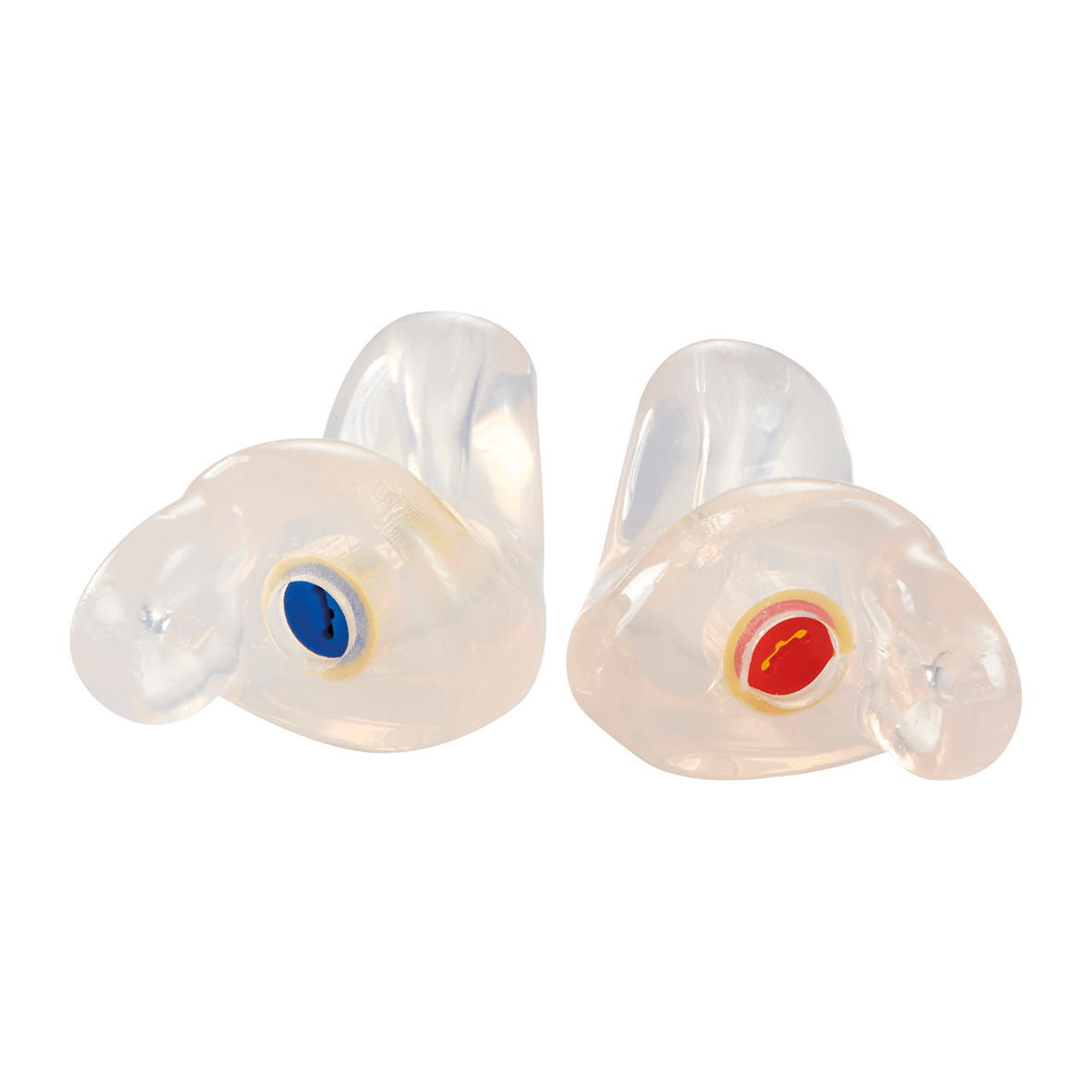
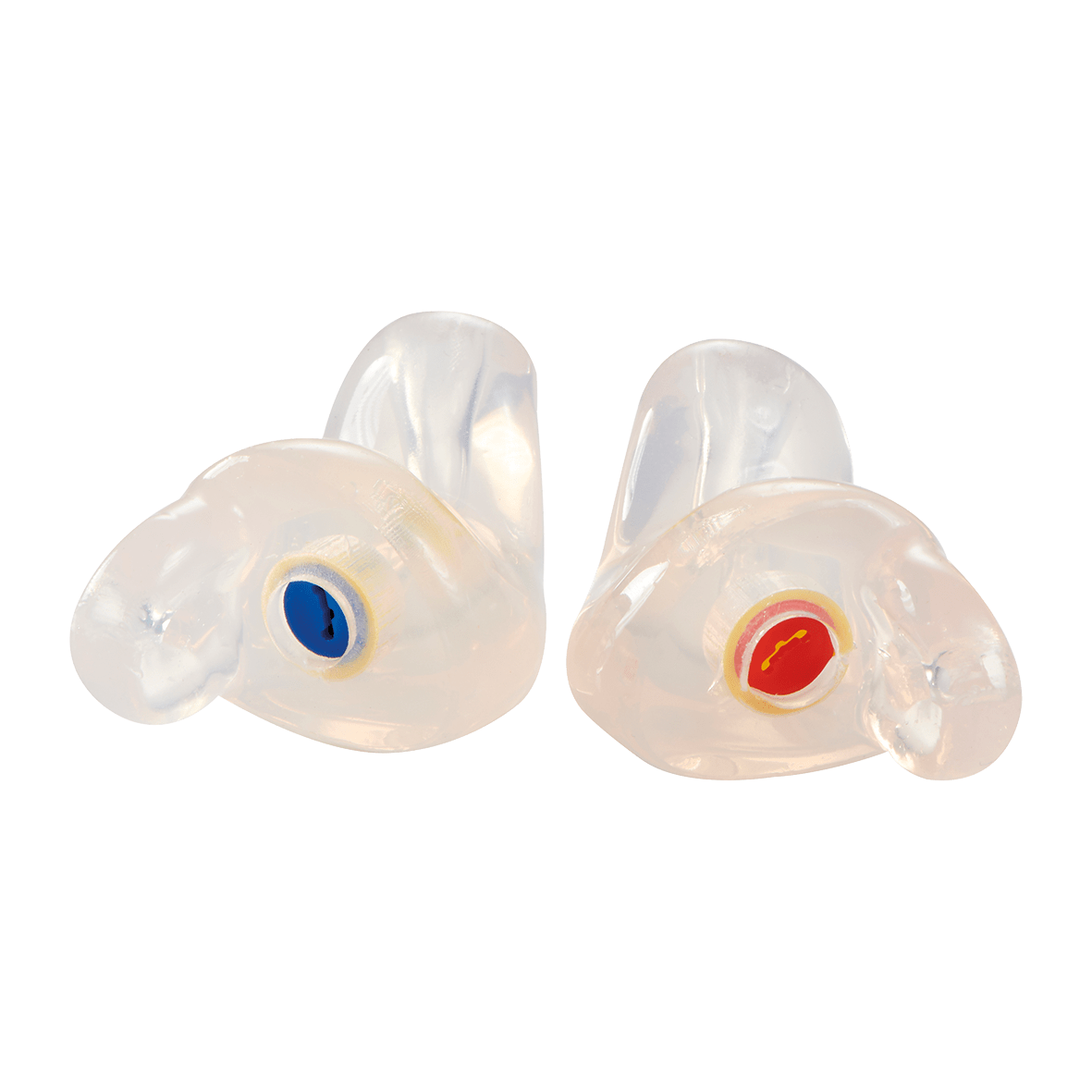
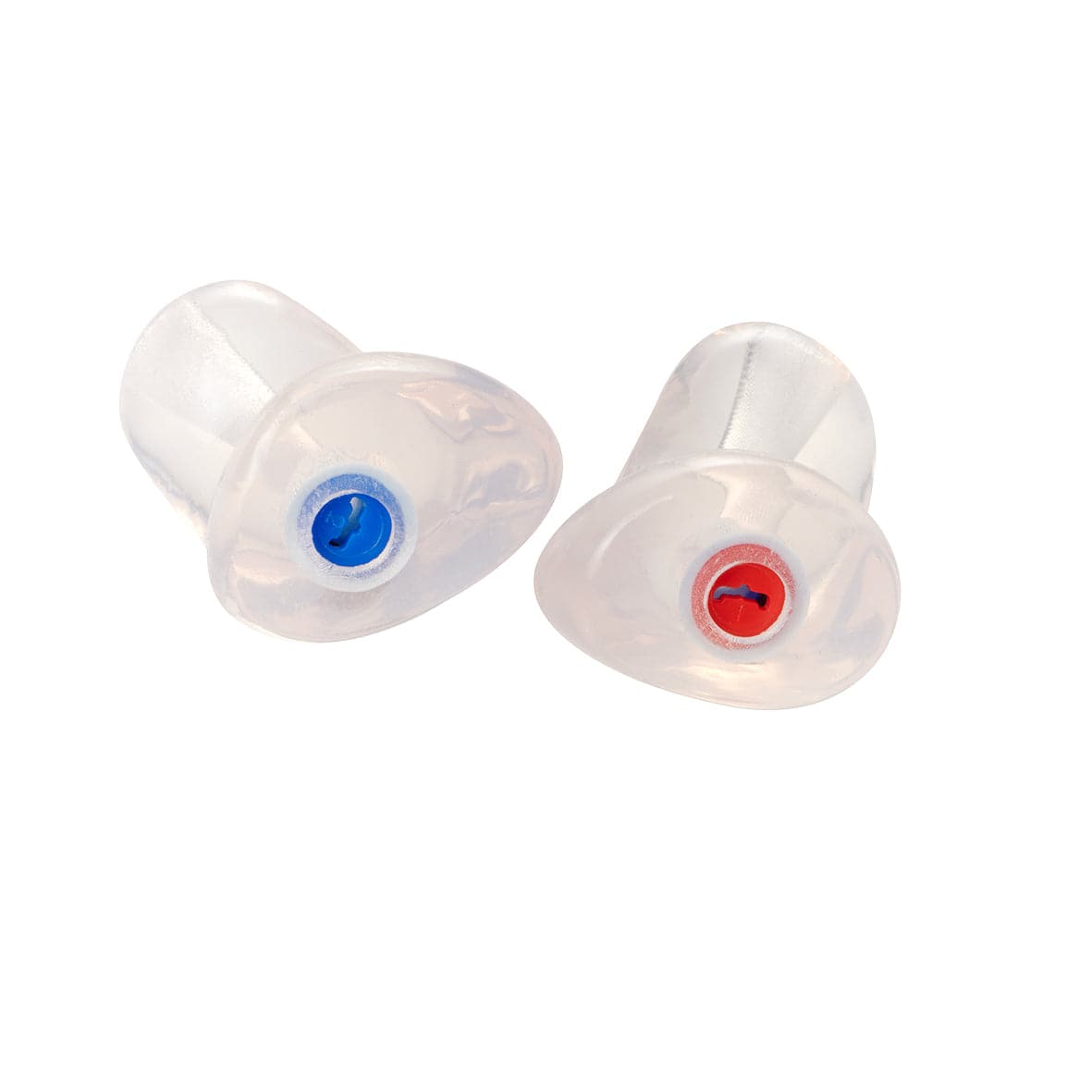
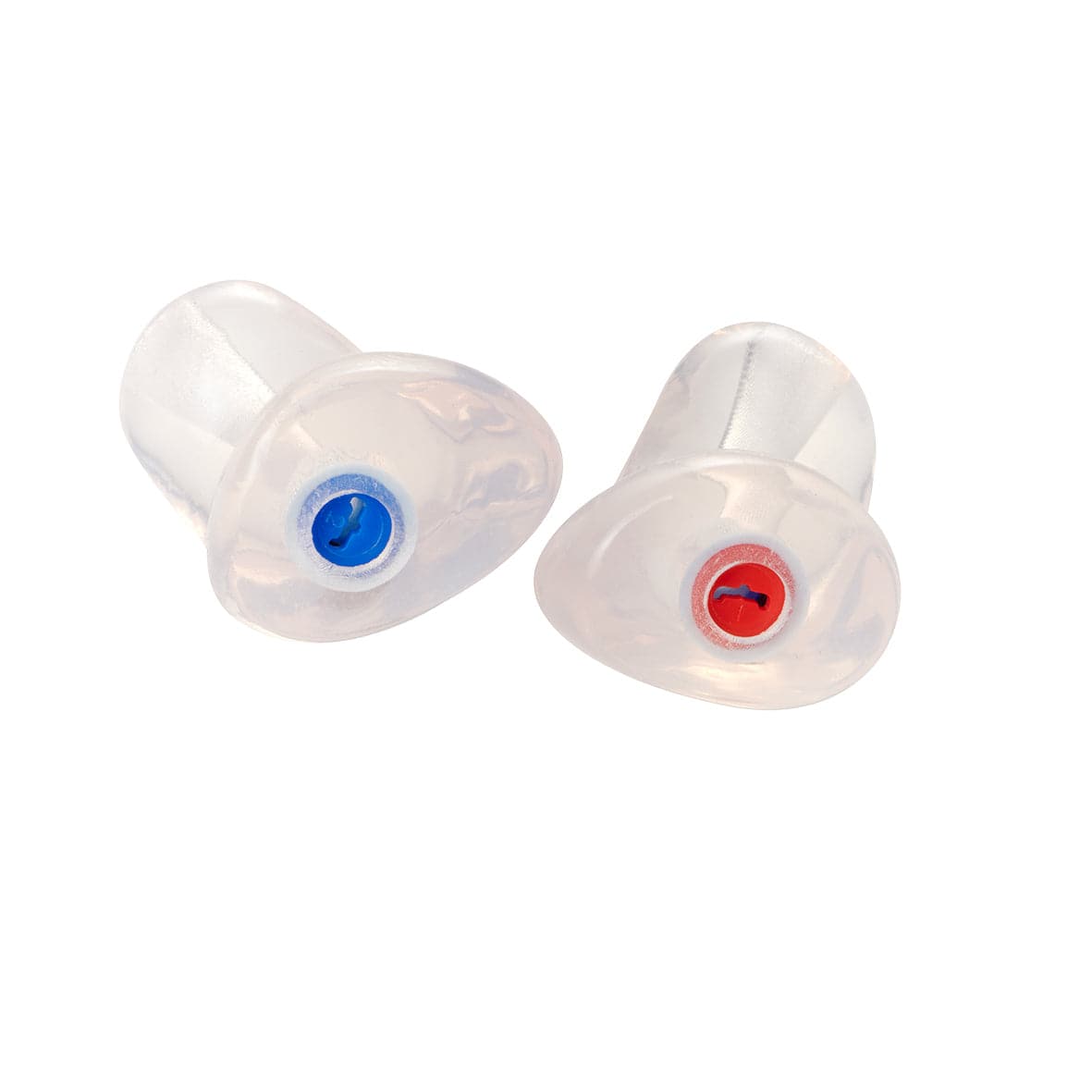
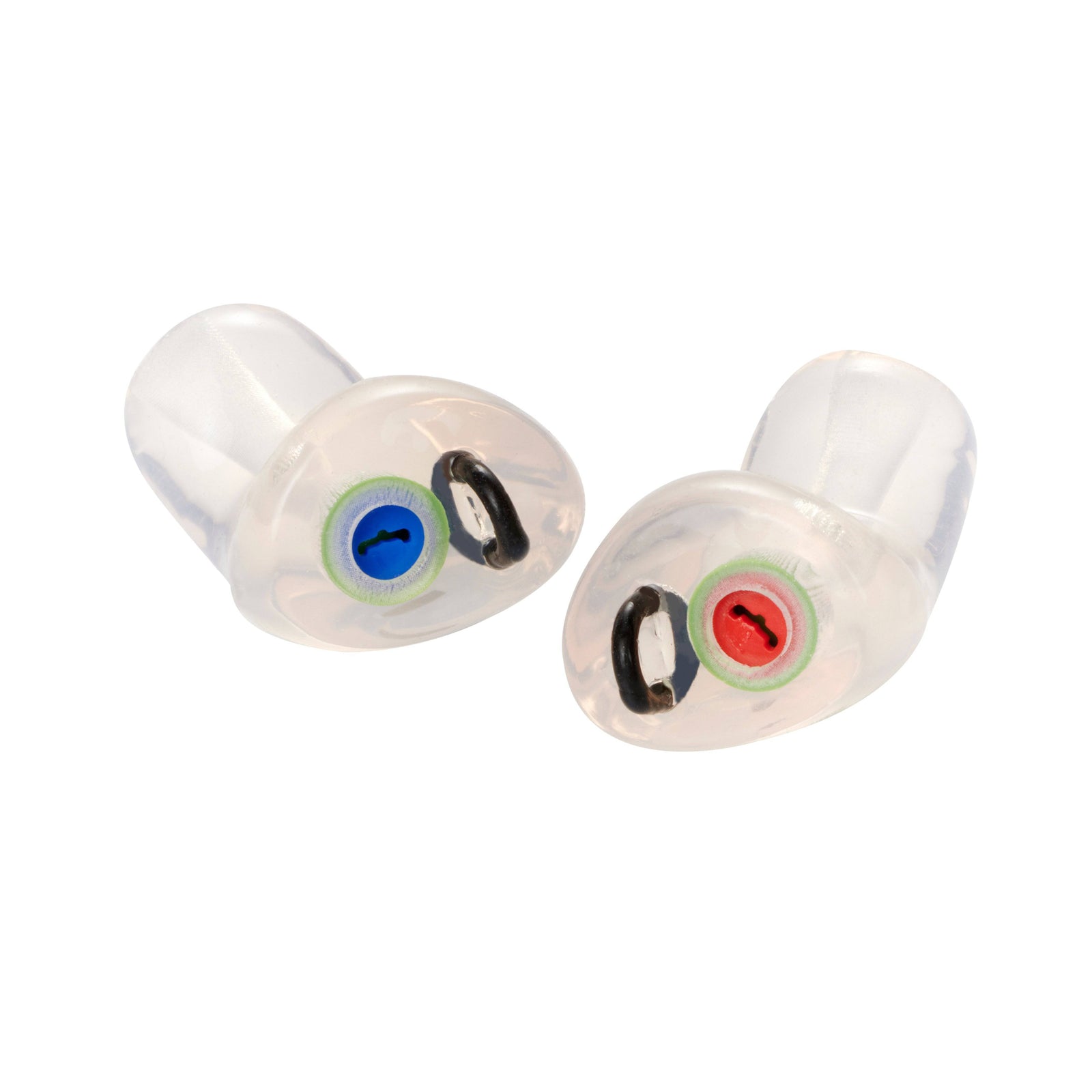
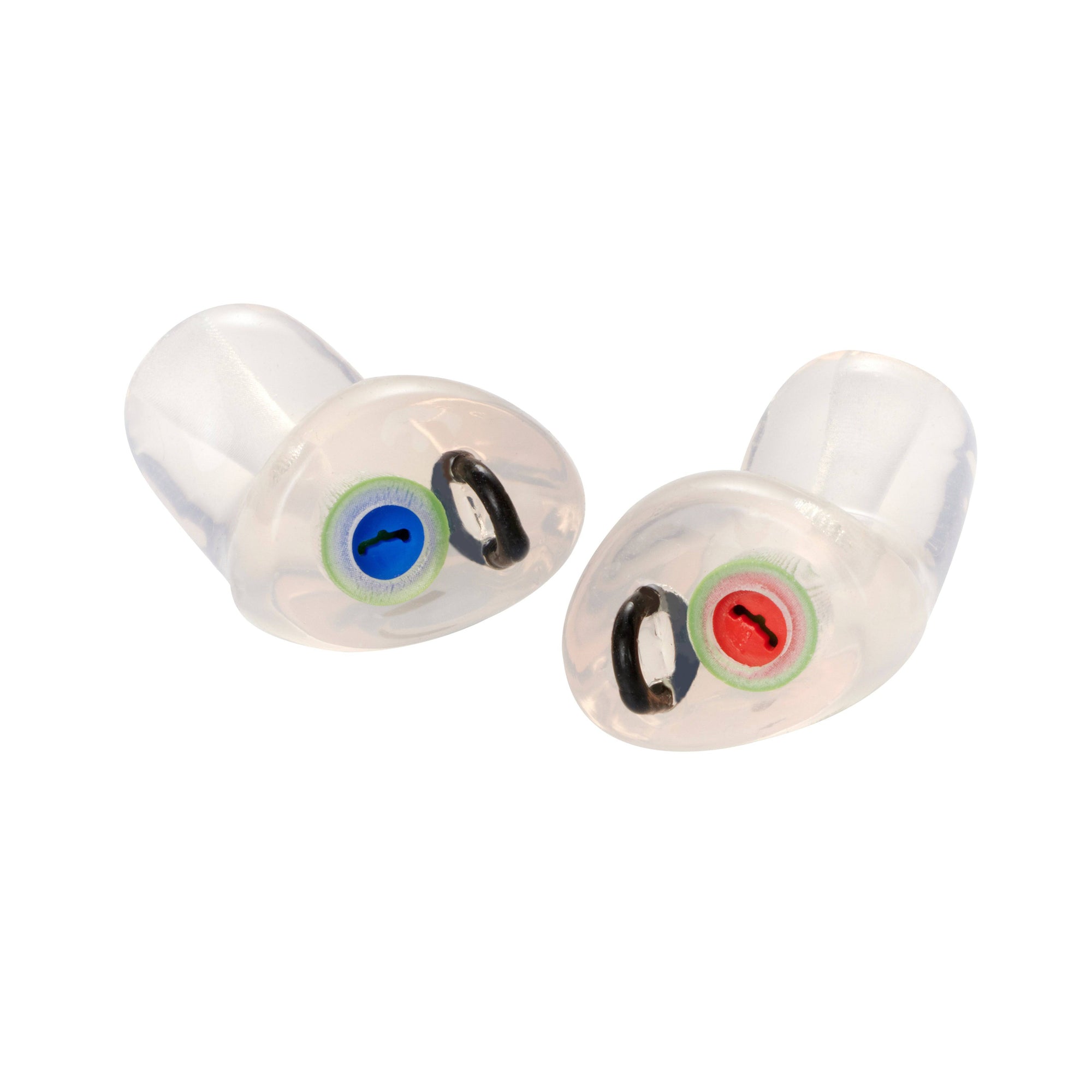
A high-fidelity earplug is not a solid plug. It has a deliberate acoustic path through it — a channel of specific length and diameter, usually with a tuned membrane or damper — which behaves as an acoustic resonator.
That assembly is engineered so the resistance it presents is roughly constant across the audible range. The result is a broadly flat attenuation curve: roughly the same number of decibels removed at 8 kHz as at 250 Hz. Turn the room down, do not rebuild the mix.
It also does something less obvious but important. The filter replicates some of the natural resonance of an open ear canal, which is part of why speech remains intelligible.
Reading the specification
- Look for a response curve, not just a single number. A single SNR or Class rating tells you how much is removed on average, not how evenly.
- Check the spread. A genuinely flat filter varies only a few dB between low and high frequency attenuation. Foam varies by 15–20 dB.
- Match attenuation to environment. 15–20 dB covers most concerts and clubs. Higher suits front-of-stage and festival crew.
Our product specification sheets publish the attenuation data for each filter, so you can compare rather than take marketing copy on trust.
Why the seal matters as much as the filter
A perfectly engineered filter is undone by a poor fit. Any gap between the plug and your canal wall lets low frequencies leak straight past, and the flat response you paid for is no longer flat.
This is the practical argument for custom moulding. A shell cast from your own ear seals completely and repeatably, which means the filter performs the way its specification says it does — every time, not just when you happen to insert it well.
Universal or custom
Universal filtered earplugs like the ACS Pacato range deliver genuine high-fidelity performance in a ready-to-wear body and are the right call for occasional use. Browse them here.
Custom-moulded sets are worth it if you are exposed regularly — performing, engineering, working in venues — or if universal shapes have never fitted your ears. See custom options.
How do I get custom ones made?
An impression appointment with a partnered audiologist or registered nurse takes about 15 minutes. Manufacturing runs 10 to 15 working days. 30 day fit warranty, 5 year extended warranty.
Can I change the filter later?
Filters can be supplied in different classes for the same shells. Ask when you order.
Talk to us
Call 1300 425 496 or book a call.

Request an NDIS Quote / Booking
Bestsellers
Did you know? Hearing damage is permanent and can begin at 70 decibels - the sound level of a noisy city street or a loud washing machine.
TRUSTED BRANDS WE WORK
WITH